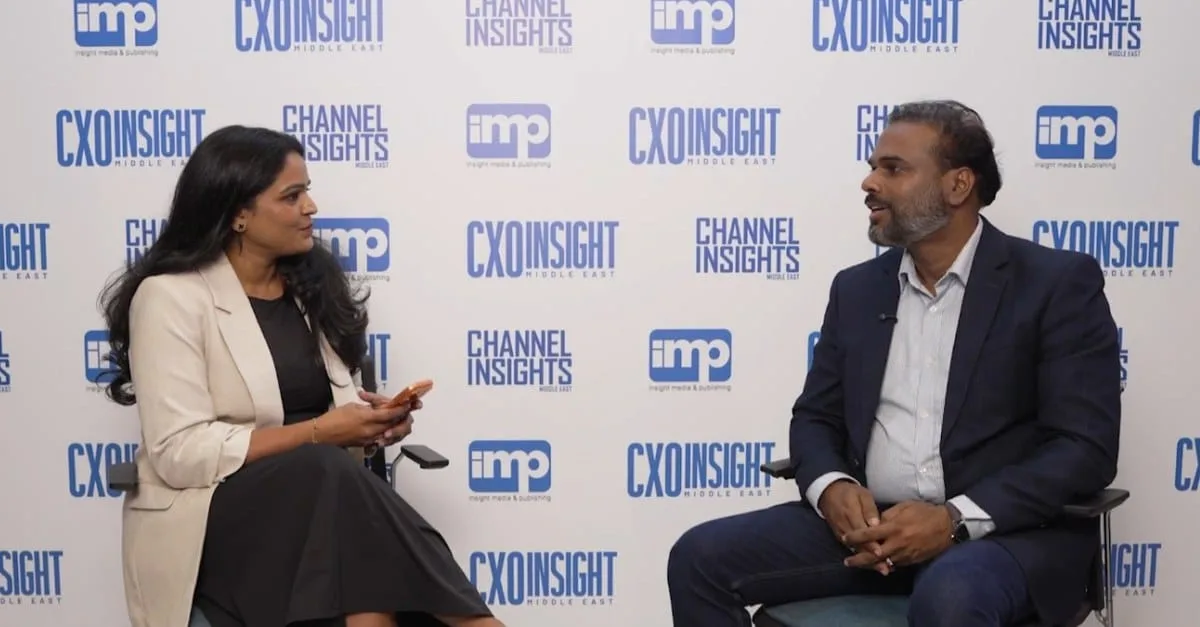
At GISEC Global 2026, CXO Insight Middle East interviewed Ajith Surendran, Regional Business Manager for META at Tiger Technology, on what building data resilience changes about the way organisations make technology decisions.
Resilience is four properties, and placement decides them
Ajith defined resilience as four things at once: data that is protected, available, accurate, and always recoverable. His argument is that you get all four by placing each file where it belongs, some on site and some in the cloud, rather than treating every file the same way. That is the premise Tiger Bridge works from: it runs alongside existing storage and places each file automatically, so resilience is a property of the architecture from day one rather than something bolted on later.
The gap widening fastest in 2026
Asked where AI adoption and data resilience are diverging most quickly, Ajith pointed straight at the split: AI runs in the cloud, and most enterprise data sits on premises. That is the gap. Keeping on-premises data in an open format and making it visible to cloud AI services closes it without a migration project, and without committing the organisation to one vendor's tooling.
What to do differently
His practical advice was to extend on-site storage into the cloud automatically, so older files move on their own and free up expensive local capacity. That creates room to scale and makes the data AI-ready at the same time. The point he returned to is that none of it should change how people work: tiering happens in the background, and teams open and close files exactly as before.
Watch the full interview on the CXO Insight Middle East YouTube channel.